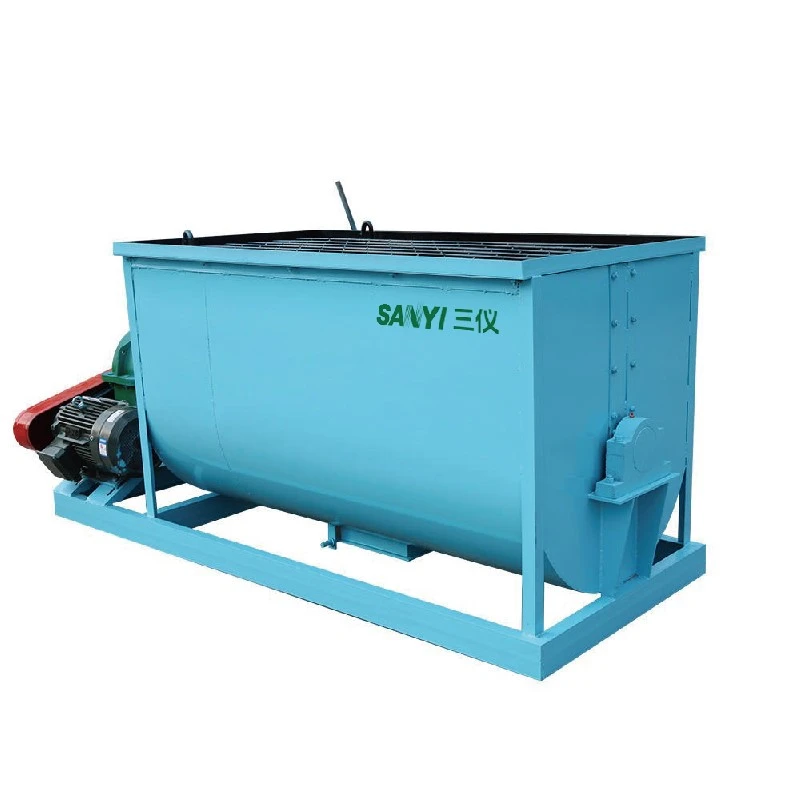
The working principle of the twin-shaft paddle mixer relies on the forced convection and shearing action generated by mechanical agitation. Two paddle shafts rotate in opposite directions, creating a complex flow field; driven by the paddles, the material undergoes continuous tumbling, shearing, and mixing, thereby achieving rapid and uniform blending. The design, shape, and angle of the paddles are critical to the mixing performance. Common paddle types include flat, inclined, and turbine paddles, each suited to specific applications and mixing outcomes.